One block can swing the price of a Solana Beach home in a big way. If you are weighing a place steps from the bluff against a larger home farther inland, you are not alone. Ocean proximity shapes value here more than almost anything else. In this guide, you will learn how views, beach access, walkability, and the west-of-5 vs east-of-5 divide influence what buyers pay and how sellers should market. Let’s dive in.
Why ocean proximity shapes value in Solana Beach
Solana Beach is compact and coastal, with a dramatic bluff that frames much of the shoreline. The community is anchored by Coast Highway 101, the rail corridor, and Interstate 5. Small shifts in distance to the bluff often mean big changes in view quality, walkability, noise, and parking. That is why a one or two block move can impact price-per-square-foot.
If you are new to the area, the City of Solana Beach offers helpful overviews of local beaches, parks, and planning resources that explain the area’s layout and public access points.
The view factor
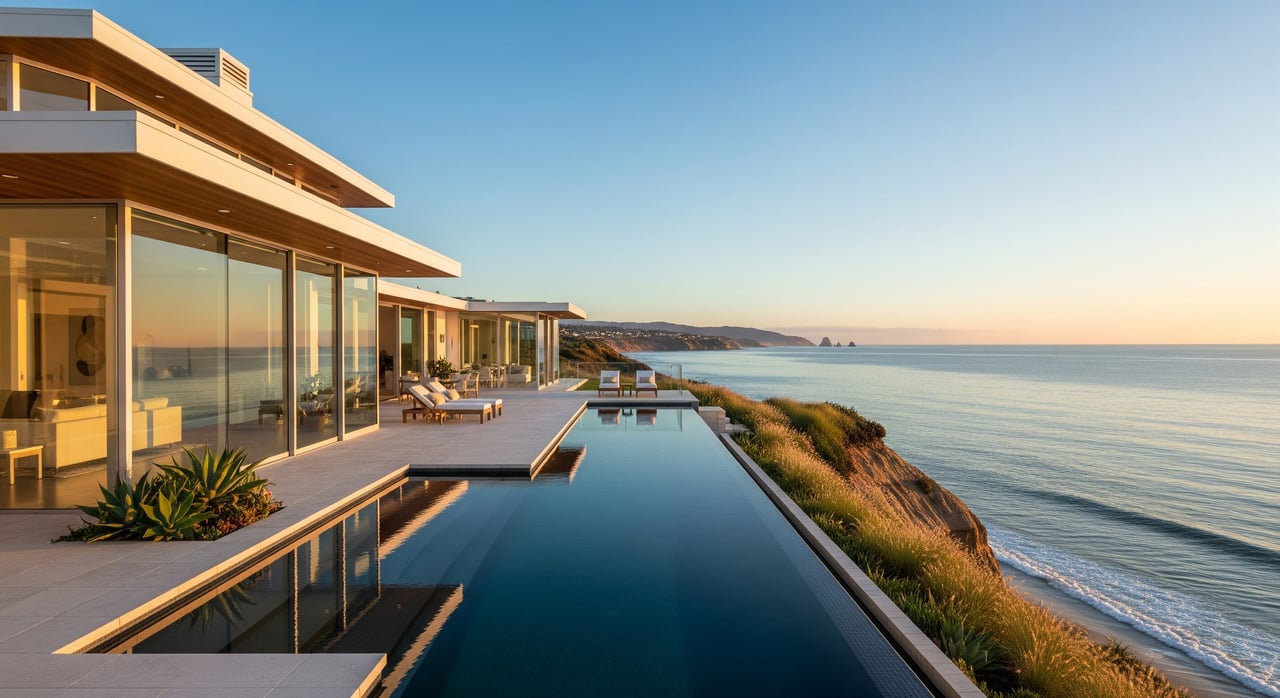
Unobstructed ocean views from main living spaces command the strongest premiums. Panoramic sunset vistas outperform partial or peek views. Permanence matters too. Buyers value a view that feels durable, with less risk of future obstruction by trees or new construction.
Beach access within minutes
Homes with private stairs or immediate access to a short public staircase often sell for more than similar homes several blocks inland. Shorter walks to Fletcher Cove or another access point expand your lifestyle and your buyer pool. When two homes are similar, the one that puts your feet in the sand faster usually wins.
Walkability to Coast Hwy and Cedros
Walkability drives demand, especially for second-home and relocation buyers who want to leave the car in the garage. The Coast Highway and Fletcher Cove area generally enjoys higher walkability than inland pockets. Tools like Walk Score can help you gauge the daily convenience of a property.
Scarcity at the bluff
There are only so many bluff-top lots, and regulations limit expansion. That scarcity amplifies price elasticity. The best positions with privacy and front-row views tend to command outsized premiums compared to more common inland inventory.
West-of-5 vs east-of-5: how the line affects price
The I-5 corridor is a practical dividing line in Solana Beach. West-of-5 means closer to the beach and Coast Hwy. East-of-5 means more suburban settings and larger lots. Each side offers a different mix of trade-offs that show up in pricing.
What to expect west of I-5
- Higher price-per-square-foot, on average, due to proximity, walkability and views.
- More condos, townhomes, and small-lot homes close to the bluff.
- Better access to beaches, dining, and the Cedros Design District.
- More exposure to rail and visitor activity. Soundproofing, window quality, and parking solutions add value.
What to expect east of I-5
- Larger lots and often larger homes for the money.
- A quieter feel in many pockets and easier private parking.
- Convenient access to inland retail corridors.
- Lower average price-per-square-foot, but higher total square footage for the same budget.
Which side fits your goals
If daily beach walks and sunset views are top priorities, west-of-5 usually justifies the premium. If you want more space and yard for the price, east-of-5 can deliver. The key is to compare like with like and consider your lifestyle priorities first, then weigh price-per-square-foot versus total living area.
Micro-markets that matter in Solana Beach
Solana Beach is a city of micro-markets. Price behavior differs across these segments:
- Bluff-front and bluff-top single-family homes have the strongest scarcity premium.
- 0 to 3 blocks inland west-of-5, especially near Coast Hwy, is the ocean-view and walkability zone.
- Condos and townhomes near the beach behave differently from single-family homes and should be evaluated separately.
- Transitional pockets near rail crossings or just north and south of Fletcher Cove can trade at a discount or a premium based on noise exposure, access, and view corridors.
If you are comparing homes, treat each of these micro-markets as separate sets rather than one blended market.
How to measure ocean-proximity premiums
You do not need advanced statistics to get meaningful insight. You do need a consistent framework and a recent data window.
A simple framework you can use
- Set a time window. Use the most recent 12 to 24 months of closed sales to reflect current behavior and smooth seasonal swings.
- Separate by property type. Compare single-family to single-family and condos to condos. Do not mix them.
- Create distance bands from the bluff. Try bluff-front, 0 to 2 blocks, 2 to 5 blocks, and over 5 blocks.
- Classify views. Use listing photos and descriptions to group homes into unobstructed view, partial view, or no view.
- Track both median sale price and price-per-square-foot. Total price shows the real check you write. Price-per-square-foot reveals how scarcity, views, and proximity are priced.
- Control for basics. Beds, baths, square footage, lot size, year built or remodeled. Small differences can distort results in a compact market.
What you will likely see
- A sharp step-up for unobstructed ocean views versus partial or no view.
- Consistent premiums for 0 to 2 block beach walks compared to 5 or more blocks.
- West-of-5 price-per-square-foot outpacing east-of-5 for similar property types.
- Smaller west-of-5 homes occasionally trading at higher price-per-square-foot than larger inland homes.
Use medians rather than averages, especially for bluff-front properties where one exceptional sale can skew results.
Risks, rules, and how they affect value
Coastal living carries unique considerations. Insurance, permitting, and long-term coastal change all play a role in pricing.
Bluff erosion and sea-level context
Bluff erosion and sea-level rise are ongoing regional topics. They can influence buyer sentiment, lender requirements, and maintenance expectations. For situational awareness, the NOAA Sea Level Rise Viewer offers regional mapping and scenarios you can explore at a high level.
Flood zones and insurance
Some properties fall within mapped flood zones, which may influence insurance and financing. The FEMA Flood Insurance Rate Maps are the starting point for identifying a property’s mapped status. Your lender and insurer will rely on formal determinations, so use official resources during due diligence.
Development rules and permitting
Bluff-top development and shoreline access improvements are regulated. Setbacks, stabilization, and stairway permits are often subject to state and local review. You can review policy guidance through the California Coastal Commission and local planning resources from the City of Solana Beach. These constraints are part of why supply near the bluff is limited, which supports pricing.
Practical implications
- Buyers should budget time for disclosures and, where relevant, specialist inspections focused on coastal conditions.
- Sellers benefit from proactive documentation of permits, stair access, noise mitigation, and any bluff-related maintenance.
- Both sides should monitor planned rail or bluff stabilization projects that can affect access or perceptions during a sale period.
Real trade-offs buyers accept in Solana Beach
You will see smaller, renovated ocean cottages sell at a higher price-per-square-foot than larger homes farther inland. Some buyers accept proximity to the rail corridor because the view and walkability are exceptional. Others prefer a larger, quieter home east-of-5 and give up the nightly sunset show. Your best choice depends on how you rank space, access, sound, and view in daily life.
Seller strategies to capture ocean premiums
Lead with the lifestyle. Highlight exact walk times to Fletcher Cove or nearby access points and list the nearest dining and shopping along Coast Hwy and Cedros.
Show the view properly. Orient photography and staging toward the ocean. Capture sunrise and sunset light to showcase view corridors.
Clarify access. If you have private or immediate public stairs, make it explicit and easy to understand.
Address the negatives. Note soundproofing upgrades, window quality, and parking solutions. Buyers will pay more when concerns are solved.
Document the details. Have permits, coastal disclosures, and maintenance records organized before launch.
Buyer strategies to compete without overpaying
- Define your must-haves. Decide if your top priority is view, beach access, walkability, or space and yard. Rank them.
- Use distance and view bands. Compare properties within the same band to keep expectations realistic.
- Visit at different times. Check noise, traffic, and parking midday, evening, and weekend.
- Evaluate the access path. Count minutes from door to sand and note crossings or stairs that may slow the walk.
- Understand the rules. If the property is near the bluff, review local and state guidance early so you are comfortable with long-term considerations.
Work with a team that knows the bluff
Getting ocean proximity right in Solana Beach is about nuance. Two homes on the same street can trade very differently based on a view angle, a rail crossing, or a 90-second shorter walk to the sand. If you want a clear read on value and a strategy tailored to your goals, reach out to Lori Barnett for local guidance and a marketing plan that showcases what matters most.
FAQs
How much more does an ocean view add to a Solana Beach home price?
- The exact premium varies by view quality and property type. Use a recent 12 to 24 month window and compare medians by view class while controlling for size and age to understand the current lift.
Is west-of-5 always better for resale in Solana Beach?
- West-of-5 typically commands higher price-per-square-foot because of walkability and beach access, but east-of-5 often offers more home and lot for the money. Your goals should guide which side is better for resale in your case.
What should I know about bluff erosion and insurance in Solana Beach?
- Bluff adjacency carries long-term considerations for maintenance, permitting, and insurance. Review the NOAA Sea Level Rise Viewer for regional context and check the FEMA flood maps for mapped zones during due diligence.
Do train and highway noises eliminate ocean-view premiums in Solana Beach?
- Not necessarily. Many buyers accept rail proximity if the view and walkability are exceptional, while others discount for noise or vibration. Sound mitigation and window quality can make a meaningful difference.
How do I measure beach access when comparing Solana Beach homes?
- Time the walk from door to sand, note crossings and stairs, and group homes into bands such as 0 to 1 block, 1 to 3 blocks, and more than 3 blocks. Shorter, simpler access usually trades at a premium.
What data window should I use to analyze Solana Beach pricing?
- Use a recent 12 to 24 month period to capture current market behavior. Separate by property type and compare both median sale price and price-per-square-foot across distance and view bands.